ASHWAGANDHA TASTE EXPLAINED: WHY IT’S BITTER AND EARTHY — AND HOW TO FIX IT

Quick Summary
Ashwagandha (Withania somnifera) comes with one of the most polarizing flavor profiles in the supplement aisle: a bitter, medicinal aftertaste from withanolides, a musty, earthy aroma reminiscent of wet soil, and an astringent, throat-catching mouthfeel from its saponin content. The name itself is a clue. “Ashwagandha” comes from Sanskrit ashva (horse) and gandha (smell), traditionally translated as “smell of the horse” — a reference to the root’s strong, pungent odor. That odor sets expectations before the first sip even happens.
The full list of complaints is right below. Because withanolides are also the compounds responsible for ashwagandha’s adaptogenic benefits, there’s no way to breed the ashwagandha taste out without diluting the dose — a tension covered in full detail toward the bottom of this article.
TECHNO-MIXERS was built to handle that bitterness, astringency, and earthy flavor.
If you already know which ashwagandha mixer you need, here are quick links to these flavors in pump bottles. If you want the full picture — including how to drink ashwagandha without the bitterness, what is the chemistry behind the taste and what the liposomal bioavailability research shows — keep reading.
Lemon Curd, Bubble Gum, Peach Mango, Cherry, Grape, and Café Mocha
Ashwagandha (Withania somnifera) is one of the most extensively studied botanical supplements on the market. Decades of Ayurvedic use are now backed by a growing body of clinical research on stress and cortisol regulation, sleep quality, and strength and recovery — which is a big part of why it has become a staple adaptogen in powders, capsules, and functional beverages alike. Unfortunately, the same root that delivers those benefits also delivers one of the more polarizing taste profiles in the supplement aisle.
Typical User Complaints
- A bitter, medicinal aftertaste that lingers well after swallowing
- A strong earthy, “dirt” or “hay-like” flavor, especially in raw root powder
- A pungent, almost horse-like smell before the first taste even registers
- A chalky, gritty texture when stirred into water or juice
- A drying, astringent mouthfeel that isn’t fully explained by bitterness alone
- Sweeteners alone “breaking down” partway through the sip, letting the bitterness resurface
How TECHNO-MIXERS Can Help
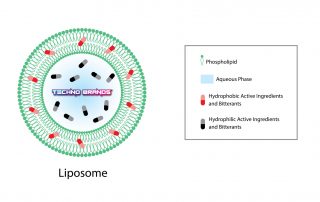
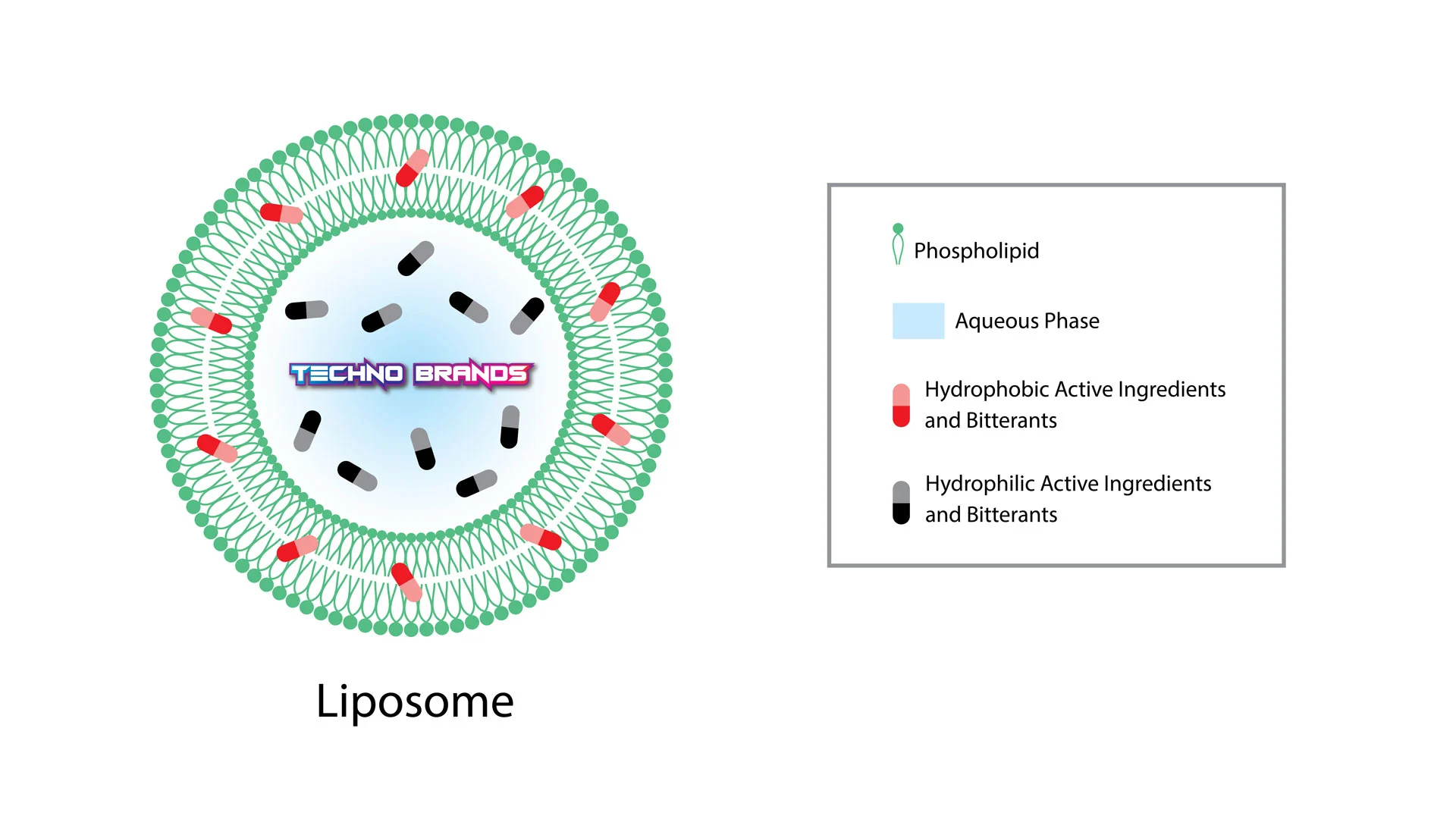
Because ashwagandha’s bitterness comes from the same withanolides responsible for its benefits, simply dumping in more sugar isn’t a durable fix — sweetness and bitterness are processed through different pathways, and bitterness tends to “break through” a sweet base once concentration is high enough. TECHNO-MIXERS’ core mechanism is physical entrapment: the oil and phospholipids in sunflower lecithin self-assemble into tiny liposomes suspended in water, and when they contact your supplement, bad-tasting molecules bind to those liposomes, minimizing their contact with your taste buds. Because those bad-tasting molecules are frequently the active ingredients themselves — as is the case with ashwagandha’s withanolides — binding them to liposomes also tends to improve their bioavailability, an added benefit rather than a tradeoff.
Ashwagandha’s pungent, peppery, astringent qualities aren’t purely a taste problem in the strict sense — much of that sensation is processed through the trigeminal nerve rather than the tongue’s taste buds, the same pathway that registers the burn of capsaicin or the sting of alcohol. To learn more about taste vs. mouthfeel check out this blog article. Lecithin, together with allulose and glycerin, coats oral surfaces and acts as a lubricant and protective barrier against exactly this kind of trigeminal irritation, addressing astringency and pungency separately from bitterness itself.
Beyond physical entrapment, TECHNO-MIXERS offers several other layers of protection, including receptor blocking, layered sweetness, and improved mouthfeel. These have been described in other blog articles, e.g., here.
How to Make an Ashwagandha Drink
Most people take ashwagandha one of three ways: swallowed in capsules, stirred as loose root powder or standardized extract into water or milk, or blended into a smoothie alongside other supplements. Capsules sidestep the taste problem, but clinical dosing protocols commonly call for 300–600 mg of standardized extract per day, which can mean multiple capsules — and capsules alone don’t answer the question of how to drink ashwagandha if you’d rather take it as a beverage.
For anyone stirring ashwagandha into a glass of water, warm milk, or a smoothie, the practical issue is ashwagandha taste itself: the bitterness, astringency, and earthy aroma described above don’t dilute away easily, even in a large glass. That’s the specific gap a dedicated ashwagandha mixer like TECHNO-MIXERS fills — a small amount added alongside your ashwagandha powder or extract turns what’s normally one of the most polarizing ashwagandha drink experiences into something you’d choose to make again. Orange Cream, Lemon Curd, and Café Mocha tend to pair especially well, since their creamy or citrus-forward profiles work against ashwagandha’s earthy, musty backbone rather than competing with it directly. Since ashwagandha flavor preferences vary a lot from person to person, it’s worth experimenting with a few options to find what works for your palate.
Recommended TECHNO-MIXERS Flavors for Ashwagandha
According to our own tests, best matching flavors for ashwagandha are Lemon Curd, Bubble Gum, Peach Mango, Cherry, Grape, and Café Mocha. Most consumers stack ashwagandha with other supplements that bring in their own notes. Taste preferences differ between people, and it is always worth experimenting with other ashwagandha flavor combinations. It is always best to start with the Assorted Flavors Pack of TECHNO-MIXERS and see which one works best for you and your supplement stack.
Liposomal Ashwagandha: Can Phospholipids Improve Bioavailability?
Ashwagandha’s taste problem sits alongside a separate absorption question: how much of an oral dose’s withanolides actually reach systemic circulation. The answer varies a lot by which withanolide is in question. An in vitro permeability study using MDCK cell membranes found that several major withanolides — withanolide A, withanone, and withanolide B — are highly permeable on their own, while the more polar, glycosylated withanosides IV and V cross far less efficiently. Withaferin A, one of ashwagandha’s most biologically active compounds, was found to be essentially impermeable in that same model — a reminder that “poor absorption” isn’t one single, fixable problem so much as a mix of very different molecules with very different permeability profiles.
That mixed picture is part of why lipid-based delivery has drawn research interest. A 2025 study built nanoliposomes specifically around withanolide A (paired with bacoside A from Brahmi) using thin-film hydration, achieving roughly 79% encapsulation efficiency and sustained release in simulated gastrointestinal fluid — direct evidence that at least one major withanolide can be successfully liposome-encapsulated with meaningful drug loading.
The most relevant human evidence comes from a 2024 randomized, double-blind, placebo-controlled trial out of Texas A&M’s Exercise & Sport Nutrition Lab, published in Nutrients. Fifty-nine healthy adults took 225 mg per day of a liposomal ashwagandha root-and-leaf extract — a notably low dose compared to the 300–600 mg typical of standardized capsule extracts — for 30 days, and researchers measured cognitive performance and mood using a validated test battery. The liposomal group showed improvements in several cognitive and mood measures relative to placebo. It’s worth being precise about what this study does and doesn’t show: it didn’t include a non-liposomal ashwagandha comparison arm, so it can’t directly prove that liposomal delivery outperforms a standard extract at the same dose — but seeing a measurable effect at 225 mg, well below typical capsule doses, is at least consistent with the idea that liposomal delivery is getting more of the active dose where it needs to go.
That combination — nuanced but favorable permeability data for several key withanolides, a working nanoliposome encapsulation method, and human evidence of efficacy at a comparatively low dose — is why several commercial “liposomal ashwagandha” products have already reached the market. As with most liposomal supplement categories, most of them don’t publish independent, product-specific bioavailability data comparing their formulation directly against a standard extract.
TECHNO-MIXERS is built on the same phospholipid-binding principle used in that research: sunflower lecithin self-assembling into liposomes around your ashwagandha dose. Mixed with your usual serving, it creates a complex very similar to liposomal ashwagandha using that same delivery chemistry — making TECHNO-MIXERS not just an ashwagandha masker, but a plausible ashwagandha booster too.
Why Does Ashwagandha Taste Bad?
As mentioned in the summary, “Ashwagandha” is translated as “smell of the horse” — a reference to the root’s strong, pungent odor. The taste itself traces back to withanolides — a family of steroidal lactones and the primary bioactive compounds responsible for ashwagandha’s adaptogenic effects. These same molecules are also the main source of its bitter, acrid taste. This isn’t incidental: it’s well documented in both the phytochemistry literature and in the botanical root itself, described as having a “strong odor and bitter, acrid taste.”
But withanolides are only part of the story. Even a “5% withanolide” standardized extract is, by definition, 95% other plant material — and raw root powder naturally contains well under 1% withanolides by weight. That remaining bulk of the extract isn’t flavor-neutral, and several of its other constituents are documented contributors to taste, aroma, and mouthfeel in their own right:
Alkaloids. Root extracts also contain a range of nitrogenous alkaloids (including isopelletierine, anaferine, cuscohygrine, and anahygrine). These compounds are bitter in their own right and compound the withanolide bitterness rather than replacing it — part of why the bitterness doesn’t simply scale down in proportion to withanolide content alone.
Saponins (sitoindosides). A separate class of glycosides, saponins — including ashwagandha’s characteristic sitoindosides — are the likely source of much of its astringent, throat-catching mouthfeel. The name comes from the Latin sapo, “soap,” and saponins behave a little like it: they produce a puckering, almost foaming sensation on the palate that is distinct from simple dryness.
Earthy, musty aroma. Ashwagandha’s musty, “dirt” or “hay-like” smell is consistent with geosmin and related microbially-derived volatiles — the same family of compounds best known for giving beets and other soil-grown roots their characteristic earthy smell. Geosmin is produced by soil-dwelling actinomycetes (Streptomyces species) that colonize root surfaces, and the human nose can detect it at concentrations as low as a few parts per trillion, which is part of why even a trace amount can dominate the overall aroma of a dried root product. We haven’t seen a published GC-MS study isolating geosmin specifically from Withania somnifera, but the mechanism is well established for root-derived botanicals generally and fits the sensory description users report.
Phytosterols and free fatty acids. GC-MS profiling of ashwagandha root extracts also shows substantial amounts of phytosterols (campesterol, stigmasterol, ß-sitosterol) and free fatty acids (palmitic acid, oleic acid, and others). These are largely flavorless on their own, but they contribute a waxy, oily mouthfeel that can read as “heavy” or “coating,” and that can trap other off-notes on the palate longer than a purely water-soluble compound would.
This creates a direct formulation tension: standardized extracts concentrated to 5–10% withanolides (for a consistent, clinically-relevant dose) tend to taste more bitter than traditional low-potency root powder, precisely because the compound responsible for the benefit is the same one responsible for the bitterness. There’s no way to “breed out” the bitterness without diluting the active dose — which is exactly why commercial “debittered” ashwagandha extracts exist as a specialty ingredient category: bitterness reduction requires a dedicated processing step, not just better sourcing.
Put together, that’s a bitter compound, a separate bitter alkaloid class, an astringent saponin class, an earthy aroma component, and a waxy mouthfeel component — five different taste and texture problems layered on top of one another, not one. That’s part of why sweeteners alone tend to fall short.