SOLVING FISH OIL’S TASTE PROBLEM: THE SCIENCE AND THE FIX

Quick Summary
Fish oil supplements come with a well-earned reputation problem: poor fish oil taste — a fishy, oily aftertaste, a lingering burp that resurfaces as fish oil burps for hours after the dose, and — when a product has actually gone rancid — a genuinely foul, paint-like smell that’s a world apart from a fresh one. These are two separate problems with two separate causes: oxidation chemistry on one hand, and simple oil-and-water physics on the other — covered in full detail toward the bottom of this article for anyone who wants the science.
TECHNO-MIXERS was built to handle the oily mouthfeel and lingering fishy aftertaste that plain flavoring alone struggles with.
If you already know which fish oil mixer flavor you need, here are quick links to these flavors in pump bottles. If you want the full picture — including how to take fish oil without the burps, what to mix fish oil with for the best results, and what the phospholipid bioavailability research actually shows — keep reading.
Lemon Curd, Orange Cream, Peach Mango, Cherry, Grape, Raspberry, and Strawberry & Cream
Fish oil — concentrated EPA and DHA from marine sources — is one of the most extensively researched and widely taken supplements on the market, tied to a large evidence base on cardiovascular and cognitive health. Unfortunately, the same polyunsaturated fats responsible for those benefits are also exceptionally reactive, which is a big part of why fish oil has earned a reputation as one of the harder supplements to take without complaint.
Typical User Complaints
- A fishy, oily aftertaste that lingers well after swallowing
- Repeating fish oil burps that resurface the taste for hours after the dose
- A strong, unpleasant “paint” or “old fish” smell straight from the bottle
- A greasy, oily mouthfeel that coats the tongue and throat
- Nausea or an upset stomach shortly after taking a dose
- Sweeteners or flavoring alone failing to mask the fishy note once it resurfaces in a burp
How TECHNO-MIXERS Can Help
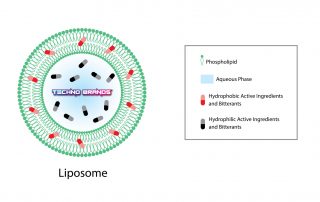
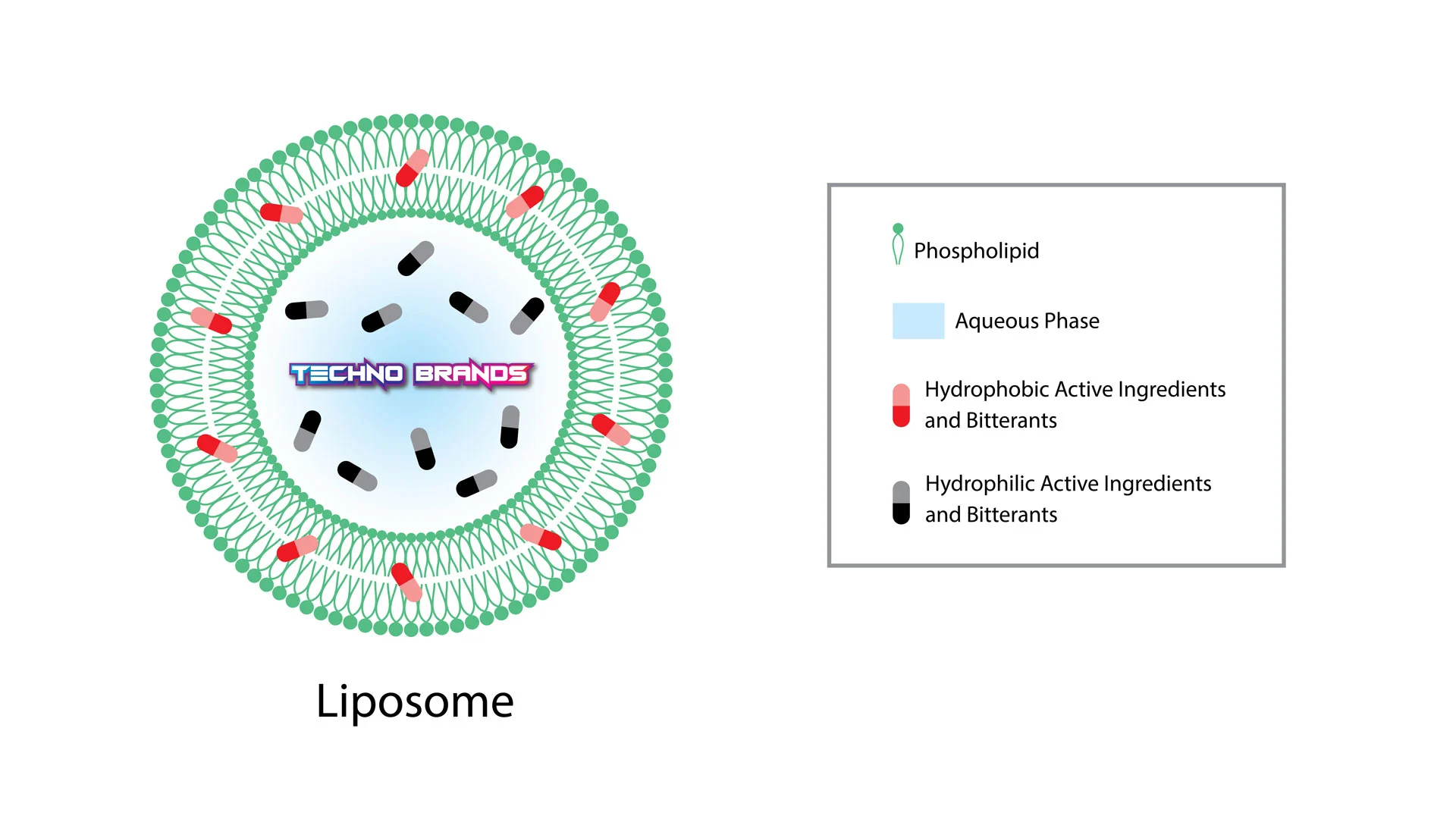
TECHNO-MIXERS’ core mechanism is physical entrapment: the oil and phospholipids in sunflower lecithin self-assemble into tiny liposomes suspended in water, and when they contact fish oil, they help emulsify and disperse it through the liquid rather than letting it sit as a separate oily layer. Aldehydes and other bad-tasting oxidation byproducts bind to those liposomes, minimizing their contact with your taste buds, while the taste masking agents and the layered sweetener system covers what gets through.
Fish burps are a different kind of problem — they’re mechanical, not chemical: fish oil is less dense than stomach contents, so it tends to float to the top, and a normal burp can carry a bit of it back up with it. Better emulsification and dispersion may reduce how much oil is sitting there ready to float free in the first place, but this is a plausible mechanical assist, not a guarantee — if the fundamental physics of oil floating on a liquid is at play, no flavoring system eliminates it entirely.
How to Take Fish Oil Without the Burps
Most people take fish oil one of two ways: in softgel capsules, or as liquid oil taken straight or mixed into a beverage. Capsules sidestep direct tongue contact, but a typical therapeutic dose of 1–4 grams of combined EPA and DHA per day often means multiple large softgels, and capsules don’t eliminate fish burps since the oil still ends up in the stomach either way. Liquid fish oil is dosed more flexibly and is often preferred by people who can’t comfortably swallow several softgels — but taken straight, it’s also the most direct route to the fishy, oily taste this article is about.
For anyone mixing liquid fish oil into water or juice, the practical issue is getting an oil to disperse evenly in a water-based drink at all — fish oil doesn’t dissolve, it separates, so a plain glass of juice with fish oil stirred in will still show an oily layer on top unless something helps emulsify it. A dedicated fish oil mixer like TECHNO-MIXERS fills that gap: a small amount added alongside your dose acts as a fish oil emulsifier, a fish oil masker, and a fish oil booster, helping disperse the oil through the liquid, masking the fishy taste, and plausibly improving bioavailability at the same time. Lemon Curd, Orange Cream, and Peach Mango tend to work best against fish oil specifically, since citrus-forward profiles cut through oiliness more effectively than heavier, creamier flavors. Shake or stir thoroughly right before drinking, since fish oil will still separate out again if the mixture sits.
Recommended TECHNO-MIXERS Flavors for Fish Oil
According to our own tests, the best matching flavors for fish oil are Lemon Curd, Orange Cream, Peach Mango, Cherry, Grape, Raspberry, and Strawberry & Cream. Most consumers stack fish oil with other supplements that bring their own notes, so it’s always worth experimenting with combinations. Start with the Assorted Flavors Pack of TECHNO-MIXERS and see which one works best for you and your supplement stack.
Liposomal Fish Oil: Can Phospholipids Improve Bioavailability?
Fish oil’s taste problem sits alongside a genuinely contested absorption question, and the evidence here is more mixed than for many other supplements. Most fish oil delivers its EPA and DHA as triglycerides (or, in cheaper products, as ethyl esters), while krill oil delivers a meaningful share of its omega-3s bound to phospholipids instead. Krill oil is frequently marketed as an odorless fish oil alternative, largely on the strength of this phospholipid-bound structure. Phospholipids are amphiphilic, which in principle should aid emulsification and absorption — but head-to-head human trials on whether this actually translates into better bioavailability disagree with each other.
A 2011 crossover study found krill oil produced a numerically higher incorporation of EPA and DHA into plasma phospholipids than fish oil triglycerides or ethyl esters, but the difference for EPA only reached a statistical trend (p = 0.057), not full significance, and DHA and combined EPA+DHA showed no significant difference at all. A separate crossover trial comparing krill oil, krill meal, and fish oil found krill oil outperformed both — but krill meal and fish oil, despite krill meal also containing phospholipid-bound omega-3s, showed no difference from each other, which argues against phospholipid binding alone being the explanation. More recent meta-analyses have come down on the side of krill’s phospholipid forms showing a genuine absorption edge, but the field has not fully settled the question, and some of the disagreement likely comes down to differences in free fatty acid content between products rather than phospholipid binding per se.
It’s worth being precise about what this means for TECHNO-MIXERS specifically: the krill oil research is about omega-3s that are natively bound to phospholipids inside the oil itself, which is a different mechanism from sunflower lecithin liposomes formed around already-esterified fish oil in your glass. TECHNO-MIXERS’ liposomes may still aid absorption through improved emulsification — breaking the oil into smaller, more water-dispersed particles is a recognized general strategy for improving fat absorption — but this is a mechanistically plausible assist, not the same claim being tested in the krill oil literature, and we’re not aware of any published human bioavailability data comparing TECHNO-MIXERS-treated fish oil against a standard dose.
Taken together: TECHNO-MIXERS is a proven fix for the taste and dispersion problem, and a mechanistically plausible but unproven assist for absorption — not a guaranteed bioavailability upgrade.
Liposomal Fish Oil Products: A Validated Idea, Priced at a Premium
Encapsulating fish oil in phospholipid liposomes isn’t a hypothetical idea — it’s already a small, established product category. Several brands sell dedicated liposomal fish oil and liposomal omega-3 liquids built on the same phospholipid self-assembly principle described above, and their existence in the market is itself a signal that the taste and dispersion benefits of liposomal delivery are commercially real, not just a theory. The catch is the price tag attached to buying that benefit pre-made.
Dedicated liposomal fish oil and liposomal omega-3 liquids typically cost around $1.00–$1.35 per daily serving, compared to roughly $0.10–$0.20 per day for a standard fish oil softgel delivering a comparable dose — a five- to tenfold premium. That gap is too large to be justified by the encapsulation step alone: the phospholipid ingredients doing the work (sunflower or soy lecithin) are inexpensive, so the difference is mostly what you’re paying to have someone else pre-mix them for you.
TECHNO-MIXERS lets you build that same mechanism yourself: pair commodity-priced fish oil with TECHNO-MIXERS at the time of dosing instead of paying for a pre-mixed liposomal bottle. It’s a lower-cost route to the same benefit as buying a premium formula outright — not a certified match to any specific commercial formulation’s particle size or lab-verified specs, but built on the same phospholipid self-assembly principle those products charge a premium for.
Why Does Fish Oil Taste Bad?
Fish oil’s taste complaints actually split into two distinct mechanisms, and telling them apart matters for figuring out what, if anything, is actually wrong with a given bottle.
Oxidative rancidity. EPA and DHA are polyunsaturated fatty acids with several reactive double bonds, which makes them highly susceptible to oxidation on exposure to oxygen, heat, or light. As the oil oxidizes, those double bonds break down into peroxides and then into aldehydes — compounds like hexanal and related short-chain aldehydes that are directly responsible for the sharp, “old fish” or paint-like smell people associate with spoiled fish oil. This is measurable: industry quality benchmarks like peroxide value, anisidine value, and TOTOX (a combined score) are used specifically to quantify how oxidized a batch of fish oil is, and reputable manufacturers test against these limits. Genuinely rancid fish oil isn’t just unpleasant — the same oxidation that ruins the taste also degrades some of the EPA and DHA content itself, so a rancid product delivers less of what you’re paying for on top of tasting worse.
Mechanical reflux (fish burps). Fish burps are a completely different mechanism, and they can happen even with a perfectly fresh, unoxidized oil. Fish oil is less dense than the fluid in your stomach, so after a dose it tends to float to the top of stomach contents. When the lower esophageal sphincter relaxes during a normal burp, a small amount of that floating oil can travel back up along with it, carrying a fishy taste and smell even though nothing is actually spoiled. Taking fish oil on an empty stomach, lying down soon after a dose, or having naturally lower stomach acid can all make this more likely, since they slow how quickly the oil clears the stomach.
The two mechanisms compound each other in practice: a rancid oil that also floats and refluxes delivers the worst of both problems, while a genuinely fresh oil taken with food may still produce an occasional mild burp purely from the physics of oil floating on liquid. Distinguishing which one you’re dealing with matters — a persistent, worsening “paint” smell straight from the bottle points to rancidity and a product that should be replaced, while an occasional mild fishy burp after an otherwise normal-smelling dose is more likely just mechanical, and not a sign anything is wrong with the oil itself.