FUNCTIONAL MUSHROOM DRINKS: HOW TO MAKE THEM ENJOYABLE
Quick Summary
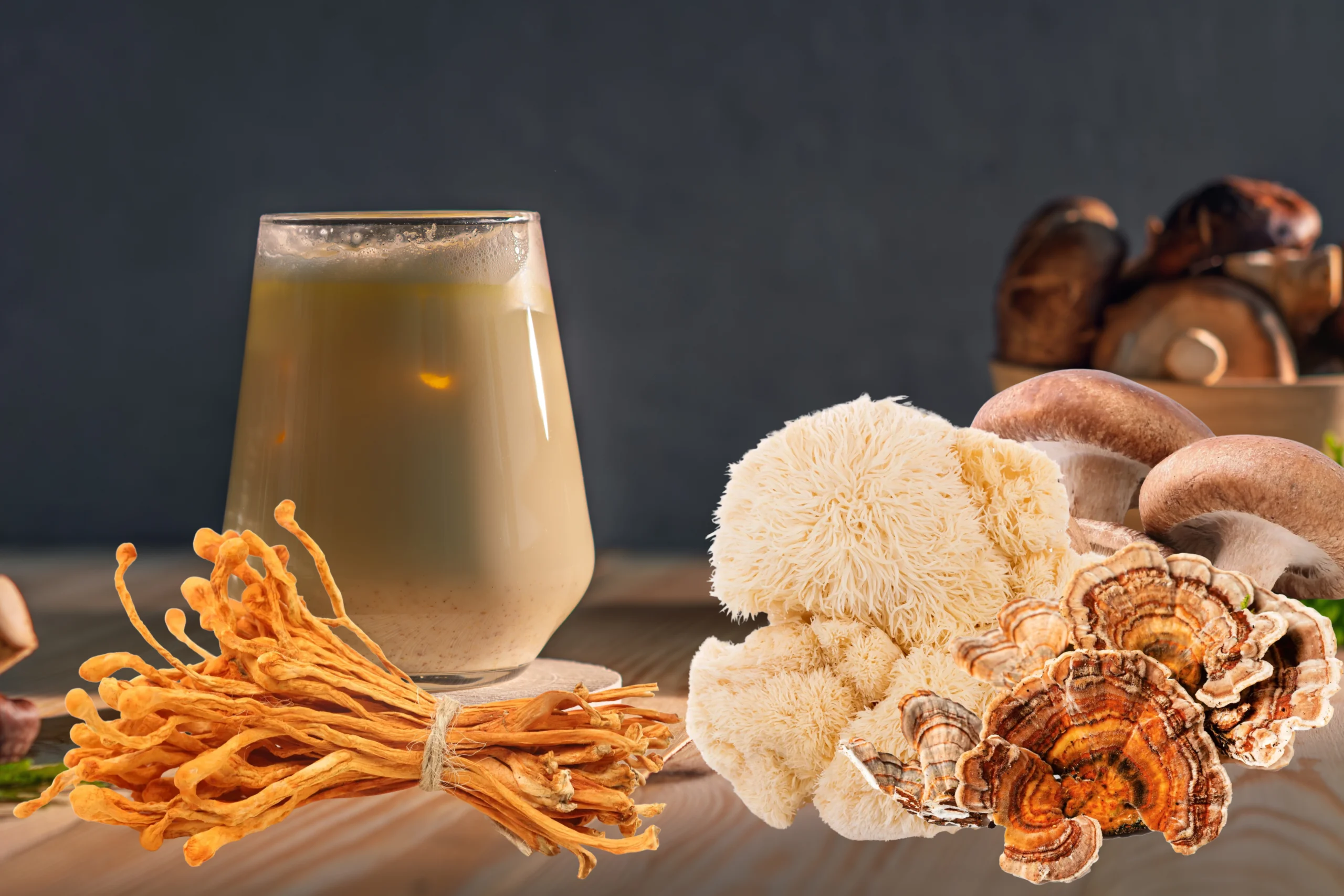
Functional mushroom extracts — from Reishi, Lion’s Mane, and Cordyceps to Chaga, Shiitake, Turkey Tail, and Maitake — come with one of the most contentious and off-putting flavor profiles in the supplement aisle: slightly bitter, medicinal taste from concentrated triterpenes, a musty, earthy aroma from mushroom-derived volatile compounds, and a gritty, chalky mouthfeel when whole mushroom powder is stirred into liquid. Fly agaric and psilocybin-containing mushrooms share the same earthy bitterness, with an added edge from their own alkaloid content. Most extracts also carry a strong umami backbone, which can suppress perceived sweetness and mute added flavors on top of the bitterness itself.
TECHNO-MIXERS was built to handle that unwanted umami, bitterness, earthiness, gritty mouthfeel or any other off-taste or off-flavor you may encounter.
If you already know which mushroom mixer you need, here are quick links to these flavors in pump bottles. If you want the full picture — including how to take mushroom extracts without the bitterness, what the liposomal bioavailability research shows, and the chemistry behind the taste — keep reading.
Café Mocha, Caramel, Cherry, Lemon Curd, Raspberry, Strawberries & Cream, Orange Cream, Fruity Maple
Functional mushrooms are among the most extensively studied botanicals on the market, with a growing body of research behind immune, cognitive, and energy-related benefits — which is a big part of why they’ve become a staple across powders, tinctures, capsules, and functional beverages alike. The catch is that the compounds responsible for those benefits are frequently the same ones working against you at the first sip.
Typical User Complaints
- A bitter, resinous, almost medicinal aftertaste that lingers well after swallowing, most pronounced in Reishi and Chaga
- A strong earthy, musty, “forest floor” aroma across nearly every species, from fresh mushroom to dried extract powder
- A pungent, shellfish- or seafood-like off-note in some Cordyceps extracts
- A gritty, chalky, sand-like texture when whole mushroom powder is stirred into water, coffee, or a smoothie
- A lingering bitterness that resists sweeteners alone, resurfacing partway through a sip once the sweetness fades
- A sharp, medicinal, alkaline bite specific to raw Amanita muscaria and psilocybin-containing mushrooms, on top of the same underlying earthy bitterness
- A savory, umami-forward taste that comes through in many extract blends, suppressing perceived sweetness and muting other added flavors
How TECHNO-MIXERS Can Help
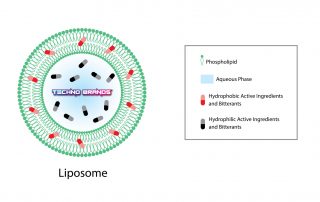
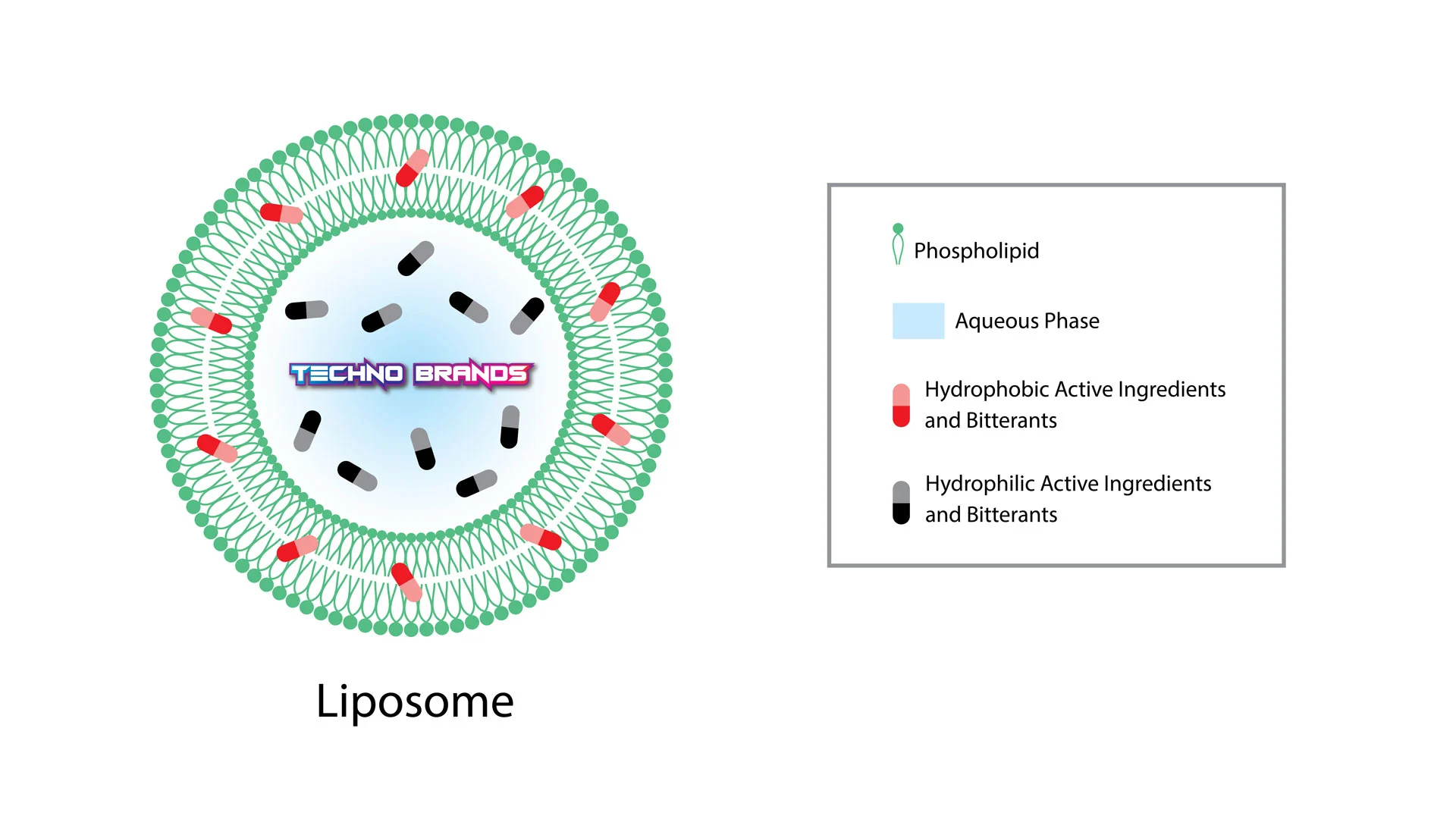
TECHNO-MIXERS’ core mechanism is physical entrapment: the oil and phospholipids in sunflower lecithin self-assemble into tiny liposomes suspended in water, and when they contact your mushroom extract, bad-tasting molecules bind to phospholipids, minimizing their contact with your taste buds. Phosphatidic acid, one of the minor phospholipids in that system, is also a well-documented bitter blocker in its own right, suppressing bitterness independently of the liposome structure itself. Because those bad-tasting molecules are frequently the active ingredients themselves, binding them to liposomes also tends to improve their bioavailability, an added benefit rather than a tradeoff.
Grittiness, dryness, and astringency are a separate problem from bitterness, and they call for a different fix. That chalky, drying, puckering sensation from whole mushroom powder is processed through the trigeminal nerve receptors, not the taste buds. Lecithin, together with allulose and glycerin, coats oral surfaces and acts as a lubricant and protective barrier against exactly this kind of texture and trigeminal irritation, smoothing out grittiness and astringency on their own terms rather than leaning on the bitterness fix to handle them too. To learn more about taste vs. mouthfeel check out this blog article.
Beyond improved mouthfeel and physical entrapment, TECHNO-MIXERS offer several other layers of protection, including broader receptor blocking and layered sweetness. See full description of our technology here. TECHNO-MIXERS were designed to be a universal taste masking system and mushroom supplement mixer, working well with raw powders, extracts, tinctures, or mushroom coffee blends.
How to Make a Mushroom Drink
If you’re wondering how to take mushroom supplements as an actual drink rather than swallowing them in capsules, you’re not alone — capsules sidestep the taste problem, but add to pill fatigue for anyone already juggling several supplements. Here’s what to mix mushrooms with, and what tends to work.
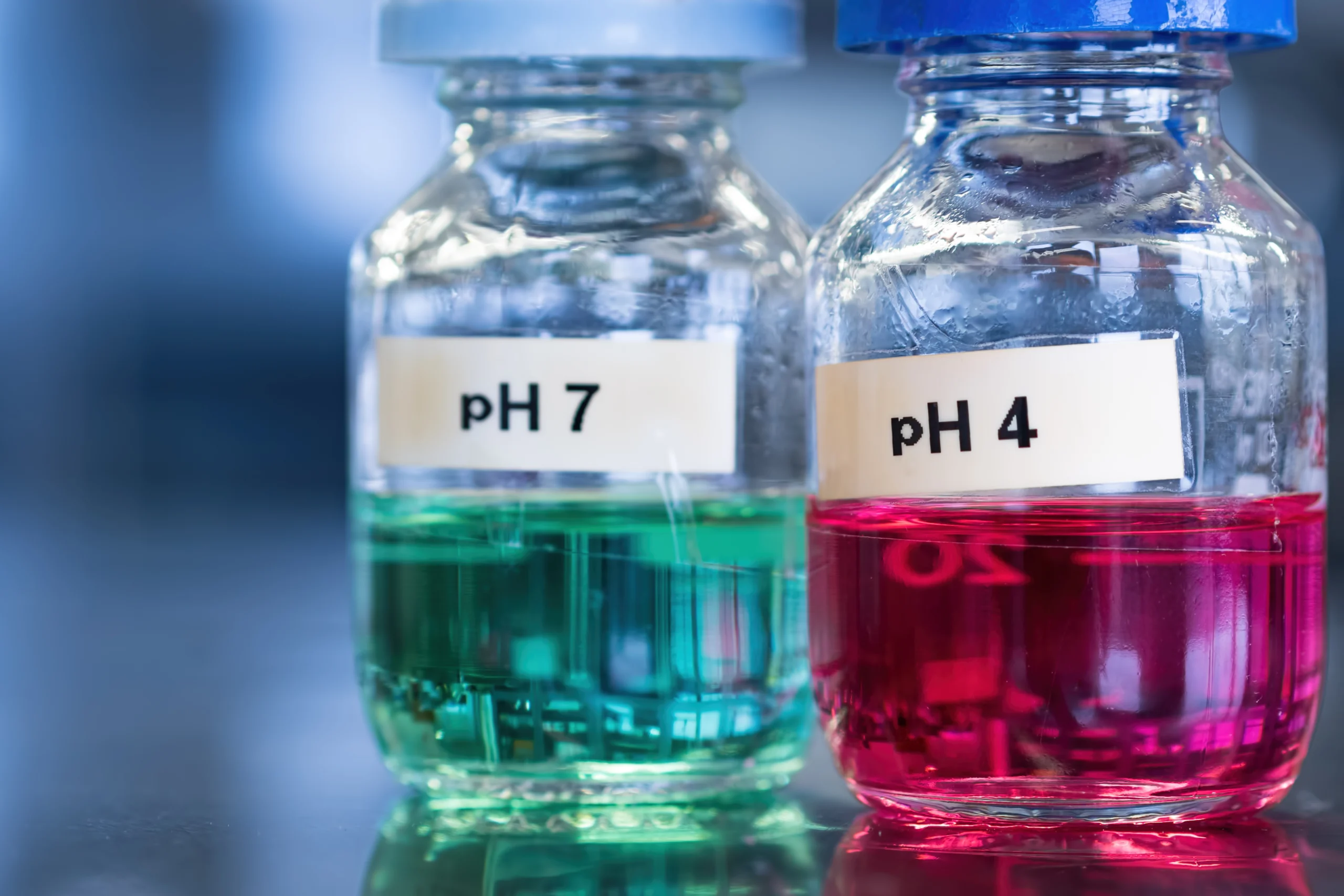
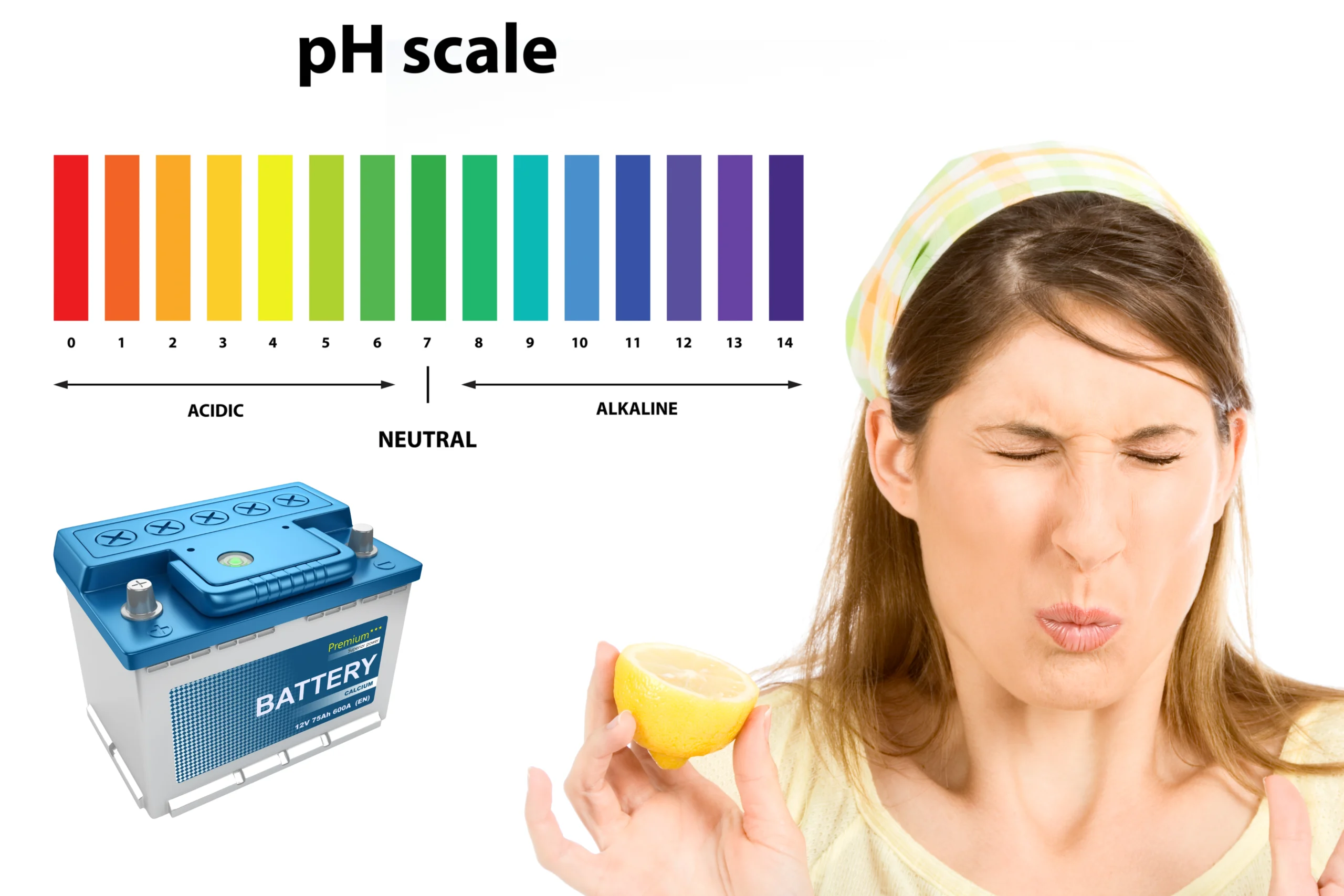
Coffee is the most common vehicle by far for a reishi drink — Reishi, Lion’s Mane, Chaga, and Cordyceps are the species most often stirred into coffee, usually with a splash of creamer or oat or almond milk to round out the bitterness. Smoothies are a close second and a popular lion’s mane drink format, typically built around banana, berries, or tropical fruit like mango or pineapple, blended with a plant-based milk or yogurt for creaminess — the fat and fiber in these bases smooth out grittiness even when they don’t fully resolve bitterness. Hot cacao and chocolate-based drinks are a popular chaga drink choice alongside Reishi, since roasted, bitter cocoa notes tend to complement mushroom bitterness rather than clash with it. Golden milk, a warm turmeric-and-spice milk drink, is another common vehicle, especially for an evening Reishi routine. Plain chaga mushroom tea — chaga chunks or powder steeped in hot water, sometimes for hours — is one of the oldest preparations of any functional mushroom, rooted in Siberian and Finnish folk tradition, though it leans on that same earthy bitterness without much to soften it. Citrus juice — orange or grapefruit — shows up often too, most famously as the “citrus tek” or “lemon tek” method associated with a magic mushroom drink, where the citric acid also speeds the body’s conversion of psilocybin into its active form, but the same citrus-masking logic gets applied informally to functional mushroom powders as well. Pineapple juice’s main acid is also citric acid, and pineapple’s own flavor pairs especially well with earthy mushroom notes, which is likely why it’s so frequently recommended for this purpose too.
DISCLAIMER: WE DO NOT ENDORSE THE USE OF EITHER AMANITA MUSCARIA (FLY AGARIC) OR PSILOCYBE (PSILOCYBIN-CONTAINING) MUSHROOMS. THE LEGAL STATUS OF THESE MUSHROOMS VARIES BY STATE AND JURISDICTION, AND USERS ARE SOLELY RESPONSIBLE FOR REVIEWING AND COMPLYING WITH ALL APPLICABLE LOCAL, STATE, AND FEDERAL LAWS BEFORE USE. USERS SHOULD CONSULT A LICENSED PHYSICIAN BEFORE USING THESE OR ANY OTHER FUNCTIONAL MUSHROOM PRODUCTS, PARTICULARLY IF PREGNANT, NURSING, TAKING MEDICATION, OR MANAGING A MEDICAL CONDITION. NOTHING IN THIS ARTICLE OR ON THIS WEBSITE SHOULD BE CONSTRUED AS MEDICAL ADVICE. THESE STATEMENTS HAVE NOT BEEN EVALUATED BY THE FOOD AND DRUG ADMINISTRATION. THIS PRODUCT IS NOT INTENDED TO DIAGNOSE, TREAT, CURE, OR PREVENT ANY DISEASE.
Most sources agree that sweetness alone — sugar, agave syrup, or honey — doesn’t do much on its own and can sometimes make things worse. The reason may be umami taste compounds; see the dedicated paragraph on this in the taste chemistry section at the bottom of this article.
TECHNO-MIXERS can be used alongside any of these existing methods or replace them altogether. Café Mocha, Caramel, and Fruity Maple flavors added to a mushroom coffee, hot cacao, or almond milk you’re already making will suppress umami and earthy notes and smooth out the bitterness and grittiness. Fruit, citrus, or berry TECHNO-MIXERS can noticeably reduce off-notes and excess tartness in juice- or smoothie-based drinks. To lower calories and keep the drink smaller, mix your mushroom extract into 3-5 oz of plain water with a full or half serving of TECHNO-MIXERS. You can also add other supplements, since TECHNO-MIXERS are built to handle complex blends.
Recommended TECHNO-MIXERS Flavors for Functional Mushrooms
Café Mocha is a natural match for mushroom coffee blends, actually it will reinforce and improve the existing coffee flavor if that’s how you take your mushrooms, you can also try adding Caramel or Fruity Maple to your coffee or cocoa. Any of these three flavors will also work great on their own in plain water. The best match for extracts we’ve tried was Cherry flavor — in water it tasted unexpectedly delicious like sophisticated cherry flavored chocolate. Second best match was Lemon Curd. Raspberry was very nice. Strawberries & Cream was very good too but mushroom extracts suppressed the strawberry to almost unrecognizable. Orange Cream was hit and miss, might work for some extracts/blends and some people. Since taste preferences vary a lot from person to person, and many people stack several mushrooms with other supplements, it’s always worth starting with the Assorted Flavors Pack of TECHNO-MIXERS to find what works best for your specific stack.
Flavors that DID NOT work for the extracts and blends we tried were Bubble Gum, Grape, Passion Fruit, and Peach Mango.
Liposomal Mushroom Extracts: Can Phospholipids Improve Bioavailability?
Mushroom taste sits alongside a separate absorption question: how much of an oral dose’s active compounds actually reach systemic circulation. For several species, the published answer is “not much.” A 2026 systematic review of Reishi’s triterpenes states plainly that they generally exhibit poor oral bioavailability, a major translational limitation, and that to date, no mushroom-based commercial product has been specifically developed with the aim of improving triterpene bioavailability. For Lion’s Mane, one of the only hard pharmacokinetic numbers published is for Erinacine S, one of its key neuroactive compounds: an absolute oral bioavailability of just 15.13% in an extract study — meaning the large majority of an oral dose never reaches systemic circulation.
That gap is part of why lipid-based delivery has drawn research interest. Liposomes encapsulating a beta-glucan have been shown to improve cellular immune activity compared to unencapsulated beta-glucan, particularly when delivered across mucosal surfaces, and a nanoliposome formulation of lentinan (the beta-glucan from Shiitake) produced measurable, detectable levels in animal serum after oral feeding — direct evidence that at least one major mushroom polysaccharide class can be successfully liposome-encapsulated with a measurable absorption outcome. Separately, researchers have built and fully characterized nano-liposomes from Cordyceps militaris extract using membrane hydration, demonstrating that Cordyceps-derived compounds can be loaded into liposomes at a stable, well-defined particle size — though that study characterized the formulation itself rather than measuring an absorption or bioavailability outcome.
That combination — clearly documented poor bioavailability for several key mushroom compounds, and a working (if still preliminary) body of liposome-encapsulation research showing the concept is technically achievable — is why several commercial “liposomal mushroom” products have already reached the market, typically pairing a phospholipid-based liquid carrier with a flavored base. As with most liposomal supplement categories, currently there is no product-specific bioavailability data comparing their formulation directly against a standard extract.
TECHNO-MIXERS is built on the same phospholipid-binding principle used in that research: sunflower lecithin self-assembling into liposomes around your mushroom dose. Mixed with your usual serving of powder, extract, or tincture, it creates a complex very similar to a liposomal mushroom product using that same delivery chemistry — making TECHNO-MIXERS not just a mushroom taste masker, but a plausible mushroom bioavailability booster too.
Why Do Functional Mushroom Extracts Taste Bad?
As mentioned in the summary, the bitterness and earthiness of functional mushroom extracts trace back to the same handful of compound classes across nearly every species — with a few species-specific twists layered on top.
For reference, the species named throughout this article: Reishi (Ganoderma lucidum), Lion’s Mane (Hericium erinaceus), Cordyceps (Cordyceps militaris), Chaga (Inonotus obliquus), Shiitake (Lentinula edodes), Turkey Tail (Trametes versicolor), and Maitake (Grifola frondosa) are the core functional species. Fly agaric (Amanita muscaria) and psilocybin-containing species such as Psilocybe cubensis and Psilocybe semilanceata round out the species discussed below.
Mushroom alcohol (1-octen-3-ol). The single most important aroma compound behind “mushroom smell” generally, 1-octen-3-ol is an eight-carbon alcohol produced when fungal tissue is damaged and enzymes break down linoleic acid in the cell membrane. It’s detectable by the human nose at concentrations as low as roughly 1 part per billion, which is part of why even trace amounts dominate a dried mushroom product’s overall aroma. It occurs across essentially every mushroom species, functional or culinary, and is the primary reason dried mushroom powders and extracts smell like “damp forest floor” regardless of which species is in the jar.
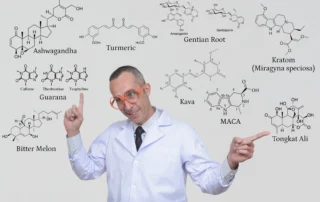
Triterpenes (Reishi and Chaga). Reishi (Ganoderma lucidum) is rich in lanostane-type triterpenoids known as ganoderic acids, which are directly responsible for its bitter, resinous, tonic-like edge — researchers have catalogued hundreds of distinct Reishi triterpenoids to date. Chaga (Inonotus obliquus) shares a related triterpene, inotodiol, contributing to a similar bitter profile, layered on top of Chaga’s own vanilla-adjacent notes.
Erinacines and hericenones (Lion’s Mane). Lion’s Mane (Hericium erinaceus) produces its own class of terpenoid and phenolic compounds — erinacines and hericenones — that tend to produce a comparatively gentler, milder flavor than Reishi’s triterpenes, which is consistent with Lion’s Mane’s reputation as one of the more approachable functional mushrooms.
Beta-glucan extraction chemistry. Across nearly all functional mushroom species — including Shiitake (Lentinula edodes), Turkey Tail (Trametes versicolor), and Maitake (Grifola frondosa) — producing a standardized extract involves heat, water, and sometimes ethanol to concentrate beta-glucans, the polysaccharides responsible for much of the immune-supporting activity these mushrooms are sold on. The beta-glucan polysaccharide itself isn’t reliably the bitter compound here: cereal-derived beta-glucans from oat and barley are largely tasteless and neutral in finished foods, while isolated fungal and yeast beta-glucan supplements are consistently sold with bitter-taste warnings on the label — which points to triterpenes, phenolics, and other compounds that co-extract alongside the glucan fraction as the more likely source of the bitterness, rather than the glucan structure itself. Either way, the same extraction process that concentrates beta-glucans also concentrates these bitter compounds — while doing little to remove the mushroom’s own umami compounds, which are small and water-soluble enough to survive the same extraction step, as covered in more detail below.
Sensory data backs this up directly: a peer-reviewed sensory lexicon study characterizing dried versus fresh mushroom flavor found dried mushrooms score highest on bitter, burnt, musty/dusty, astringent, and “old leather” descriptors, while fresh mushrooms score highest on umami, sweet, earthy/potato, earthy/damp, yeasty, and fermented notes — a measurable, published confirmation that drying and extraction shift a mushroom’s flavor profile toward bitterness and away from the umami richness of the fresh fruiting body.
Umami compounds and why fruity flavors can clash. Mushrooms are naturally among the most umami-dense foods that exist, thanks to free amino acids like glutamate and aspartate and 5′-nucleotides like guanylate (GMP) — guanylate in particular is essentially a signature mushroom compound, especially concentrated in dried Shiitake. Because these are small, water-soluble molecules, they hold up well through extraction and processing, so a standardized mushroom extract can carry a genuinely strong savory backbone right alongside its bitterness. That backbone has a real, receptor-level consequence for flavor pairing: research on the human sweet taste receptor has shown that glutamate and umami-active peptides directly suppress the receptor’s response to sucrose through an allosteric mechanism, meaning a glutamate-rich mushroom base can actively blunt the perceived sweetness of whatever it’s mixed with. Most likely, this effect works not only on sucrose (table sugar) but on other sweeteners as well. That’s a likely part of why bright, sweetness-driven fruit flavors — tropical or berry profiles in particular — can read as muted or slightly “off” against a mushroom backbone, while flavors that lean into their own savory or roasted register, such as cocoa, vanilla, coffee, caramel, and maple, tend to pair more naturally. It also lines up with what most established mushroom coffee and tonic brands actually reach for: cacao, chai spice, vanilla, and coffee itself show up far more often in the category than bright fruit.
Ibotenic acid and muscimol (Amanita muscaria). Amanita’s raw, natural-state taste is bitter and tough, driven substantially by ibotenic acid, a neurotoxic precursor compound that most processing methods convert into muscimol through heat and pH adjustment. Reviewers and manufacturers alike consistently describe unprocessed Amanita as an acquired taste at best, which is why the vast majority of commercial Amanita products rely on fruit-forward flavoring layered on top rather than presenting the mushroom unflavored.
Psilocybin and psilocin (Psilocybe species). Psilocybin mushrooms — most commonly Psilocybe cubensis and Psilocybe semilanceata (liberty cap) — share the same general earthy, musty, bitter fungal profile described above, with both fresh and dried forms described as notably chewy or rubbery in texture on top of the taste itself. The bitterness is generally attributed to the psilocybin and psilocin alkaloids themselves alongside the same general fungal bitter compounds found across the broader mushroom category.
Put together, that’s a triterpene or alkaloid bitterness layer, a near-universal earthy aroma compound, a beta-glucan extraction process that concentrates actives at the expense of flavor, and — for whole powders — a gritty, fibrous mouthfeel from chitin, the structural polysaccharide that makes up fungal cell walls. That’s several distinct taste and texture problems layered on top of one another across the functional mushroom category, not one — which is part of why sweeteners alone tend to fall short, and why a masking approach built around receptor-level and trigeminal-level mechanisms works more consistently across species than flavor-pairing alone.