KAVA TASTE EXPLAINED: WHY IT’S EARTHY AND HOW TO IMPROVE IT

Kava is valued for its calming, anxiolytic effects — but for a large share of new users, the biggest obstacle isn’t finding it or affording it. It’s getting it down.
The taste is genuinely difficult: earthy, bitter, astringent, and often numbing. These aren’t incidental flaws. They’re direct consequences of the same chemistry that makes kava work. Understanding why kava tastes the way it does — and what actually changes that — is more useful than any list of tips involving pineapple juice.
What Kava Tastes Like
The flavor profile of kava is consistent enough that most people reach for the same words: earthy, bitter, peppery, slightly chalky, and drying. It bears some resemblance to very strong green tea or muddy root water, though neither comparison fully captures it.
Alongside the bitter and earthy base, most people experience:
- A dry, puckering sensation (astringency) that makes the mouth feel rough or coated
- A mild numbing or tingling of the tongue and lips that sets in within seconds
- A lingering aftertaste that persists well after the drink is finished
- In traditionally prepared drinks, visible sediment and a gritty, particulate mouthfeel
The numbing effect is often the most disorienting for first-time users. It isn’t harmful, but it signals that something biologically active has just landed on your mucous membranes — which is precisely what’s happening.
Why Kava Tastes the Way It Does: The Chemistry
The taste of kava isn’t random. Each unpleasant note has a specific chemical origin.
Kavalactones: the active compounds behind bitterness and numbing
Kavalactones are the primary bioactive constituents of kava root. There are 18 identified kavalactones, with six (kavain, dihydrokavain, methysticin, dihydromethysticin, yangonin, and desmethoxyyangonin) accounting for the majority of pharmacological activity. They act on GABA-A receptors, voltage-gated sodium and calcium channels, and dopamine pathways — which explains the relaxation and mild euphoria.
They are also intensely bitter and lipophilic (fat-soluble). Because they are hydrophobic, they don’t dissolve cleanly in water; they partially disperse as fine droplets that land directly on taste receptors, producing bitterness and the characteristic numbing sensation via direct action on TRPV1 and local anesthetic-like membrane effects.
Flavokawains and phenolic compounds: adding to bitterness and astringency
Kava root also contains chalcones called flavokawains (A, B, and C) and various phenolic acids. Flavokawains are bitter in their own right and contribute to the dry, astringent mouthfeel by binding to salivary proteins and precipitating them — the same mechanism responsible for the astringency of red wine tannins.
Geosmin and earthy aroma compounds
Geosmin is a bicyclic alcohol produced by soil bacteria (primarily Streptomyces species) and absorbed by plant roots during growth. It is detectable by human olfaction at extraordinarily low concentrations — around 5 parts per trillion — and is the primary source of that “after-rain” or damp-earth smell. In kava, geosmin contributes meaningfully to the perceived earthy aroma, particularly in traditionally prepared root powder drinks. Its concentration varies by cultivar and soil conditions and is difficult to fully remove during standard extraction. That said, the earthy taste of kava is driven largely by kavalactones and other non-volatile root compounds; geosmin is primarily an olfactory contributor rather than the dominant taste driver.
Starch, fiber, and particulate matter
Traditional kava prepared from root powder contains significant amounts of starch, cellulose, and other insoluble plant material. Even after straining through cloth or mesh, microparticles remain suspended. These particles create the characteristic gritty mouthfeel and contribute to the chalk-like texture that many users find difficult. They also extend the aftertaste by adhering to oral surfaces.
Why These Properties Are So Difficult to Mask
Each of kava’s sensory problems presents a different challenge:
Bitterness triggered by kavalactones is a high-intensity signal. Bitter receptors (TAS2Rs) are among the most sensitive taste receptors humans have — a functional defense against plant toxins. Sweetness can partially suppress bitterness perception, but at the concentrations needed to meaningfully mask a strong bitter load like kavalactones, sweetness becomes cloying before the job is done. Approaches that work in lightly bitter beverages (flavored tea, energy drinks) are insufficient here.
Astringency is not a taste in the classical sense; it’s a tactile mouthfeel response caused by precipitation of salivary proteins. Sweeteners do not address it. Masking astringency requires either physically coating the mouth to prevent protein-tannin binding, or reducing the concentration of astringent compounds that reach oral surfaces.
The lipophilic nature of kavalactones means they resist uniform dispersion in water-based drinks. They tend to pool and concentrate on surfaces rather than distributing evenly, which is part of why kava’s taste can feel so immediate and intense.
This is why casual approaches — adding fruit juice, honey, coconut water — work only at the margins. They address sweetness and flavor but do nothing about the mechanism of bitterness or astringency. And they add volume, sugar, and calories that many users would rather avoid.
The Propylene Glycol Problem in Ready-to-Drink Kava
Some newer kava shots are made with propylene glycol (PG), which serves as a solvent to improve kavalactone solubility. It does reduce sediment and improves visual appeal by making the liquid transparent, almost clear.
The trade-offs are significant. Propylene glycol has its own taste, which most people describe as metallic, chemical or irritating and slightly sweet. This taste compounds rather than resolves the palatability problem. It also causes esophageal irritation and, in some users, heartburn and digestive discomfort.
More importantly, propylene glycol has an established Acceptable Daily Intake (ADI) of 25 mg/kg body weight/day, set by both WHO and EFSA. This is less than 2000 mg for an average weight adult. PG-based kava shots contain PG at a concentration of about 50%. Factor in typical serving sizes and consumption patterns (30-60 ml), one can consume 15-30 ml of PG and push daily intake 7-15 times above ADI. For more on this topic, see our dedicated article on propylene glycol here, and check the ingredient label of any kava shot before purchasing.
TECHNO-MIXERS Approach the Problem Differently
Rather than layering flavor over bitterness, TECHNO-MIXERS were formulated to address kava’s sensory challenges at a functional level, using a system of ingredients that each do specific work.
Sunflower lecithin and lipid nanoparticle formation
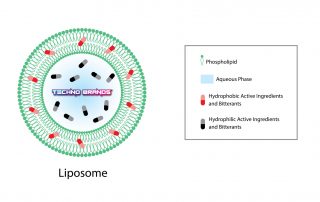
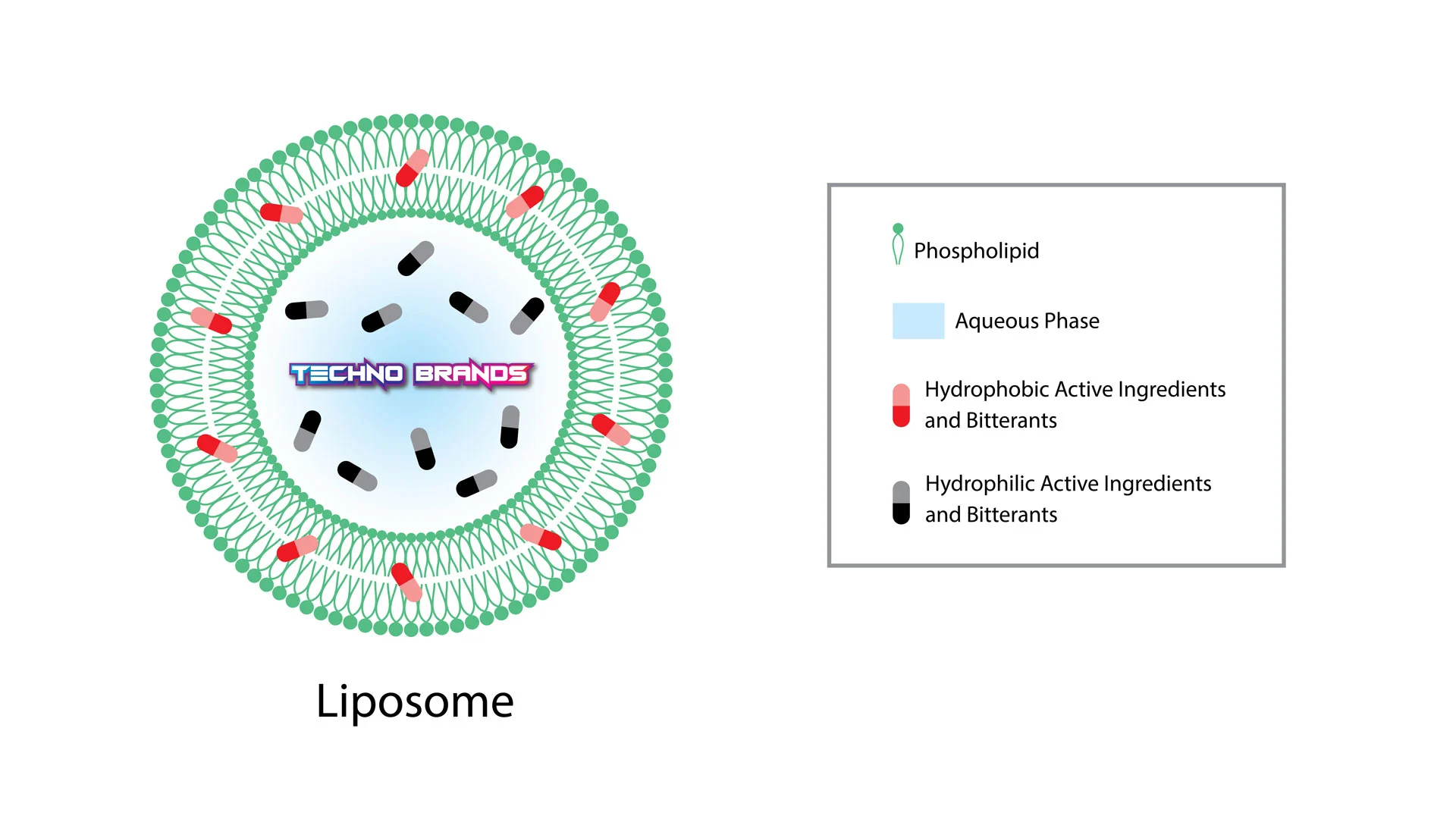
Sunflower lecithin is a phospholipid that, when dispersed in an aqueous solution, forms lipid nanoparticles — tiny droplet structures with hydrophobic cores and hydrophilic surfaces. When mixed with kava, these nanoparticles encapsulate kavalactones within their cores, physically sequestering them and dramatically reducing their direct contact with taste receptors and oral surfaces. The result is a measurable reduction in bitter perception and numbing intensity, without removing the kavalactones from the drink — their bioavailability is maintained, and in many cases improved due to enhanced solubilization.
Allulose and vegetable glycerin: mouthfeel and astringency
Allulose is a rare sugar with approximately 70% of sucrose’s sweetness and roughly 10% of its caloric value. It contributes body and texture to the drink — filling in the thin, medicinal mouthfeel that kava drinks often have. Vegetable glycerin is viscous and hydrophilic; it coats and lubricates oral surfaces, creating a physical barrier that reduces the contact between astringent compounds and salivary proteins. Together, these ingredients address the tactile dimension of kava’s sensory profile in a way that sweeteners alone cannot.
Monk fruit extract and stevia: the sweetness layer
The sweetness system in TECHNO-MIXERS uses high-purity monk fruit extract combined with stevia. Mogrosides interact with bitter taste receptors in addition to sweet ones, providing active bitterness suppression alongside sweetness. Stevia delivers the initial sweetness hit; monk fruit fills the mid-palate. At the right ratio, they cancel each other’s residual off-notes and produce a sweetness profile that reads as clean and rounded rather than artificial.
Flavor design for difficult botanical matrices
The flavors used in TECHNO-MIXERS were selected specifically for their performance in pungent, bitter botanical environments rather than adapted from standard beverage applications. Certain flavor families — including fruit profiles and creamy notes — are more effective than others at suppressing the specific off-notes produced by kava root. This is not incidental; it reflects formulation work done specifically for the application.
Practical Results
The cumulative effect of this system is a kava experience that is genuinely different from mixing with juice or coconut water. The earthy, bitter intensity is reduced. The numbing is less abrupt. The aftertaste clears faster. And the drink has enough body and texture that it doesn’t feel like watered-down medicine.
Users who have tried multiple approaches consistently report that the improvement goes beyond what they expected from a mixer. The difference is in what the system is doing mechanistically, not just cosmetically.
TECHNO-MIXERS are available in 12 flavors. For kava, the profiles that tend to perform best are Cherry, Grape, Orange Cream, and Raspberry — though individual preferences vary, and the full range is worth exploring.
For those who prefer a ready-to-drink format, Techno-Kava applies the same formulation approach in a finished product. Passion Chill pairs kava with passionflower extract for a deeper relaxation profile, without propylene glycol, without excessive sweetness, and without compromise on taste.
The Bottom Line
Kava’s taste is difficult for specific, well-understood reasons rooted in its phytochemistry. The kavalactones that produce relaxation are the same compounds responsible for bitterness and numbing. The flavokawains create astringency. The particulate matter adds grit. These aren’t problems that sweeter juice or a stronger chaser can adequately solve.
Fixing the kava experience requires addressing those mechanisms directly — encapsulating bitter compounds before they reach receptors, lubricating oral surfaces to reduce astringency, and building a sweetness system that actively suppresses bitter signals rather than just competing with them. That’s the logic behind TECHNO-MIXERS, and it’s why the result feels like more than a flavoring.
If your kava routine is something you tolerate rather than something you look forward to, the problem is formulation. And formulation problems have solutions.